Closeout is still construction.
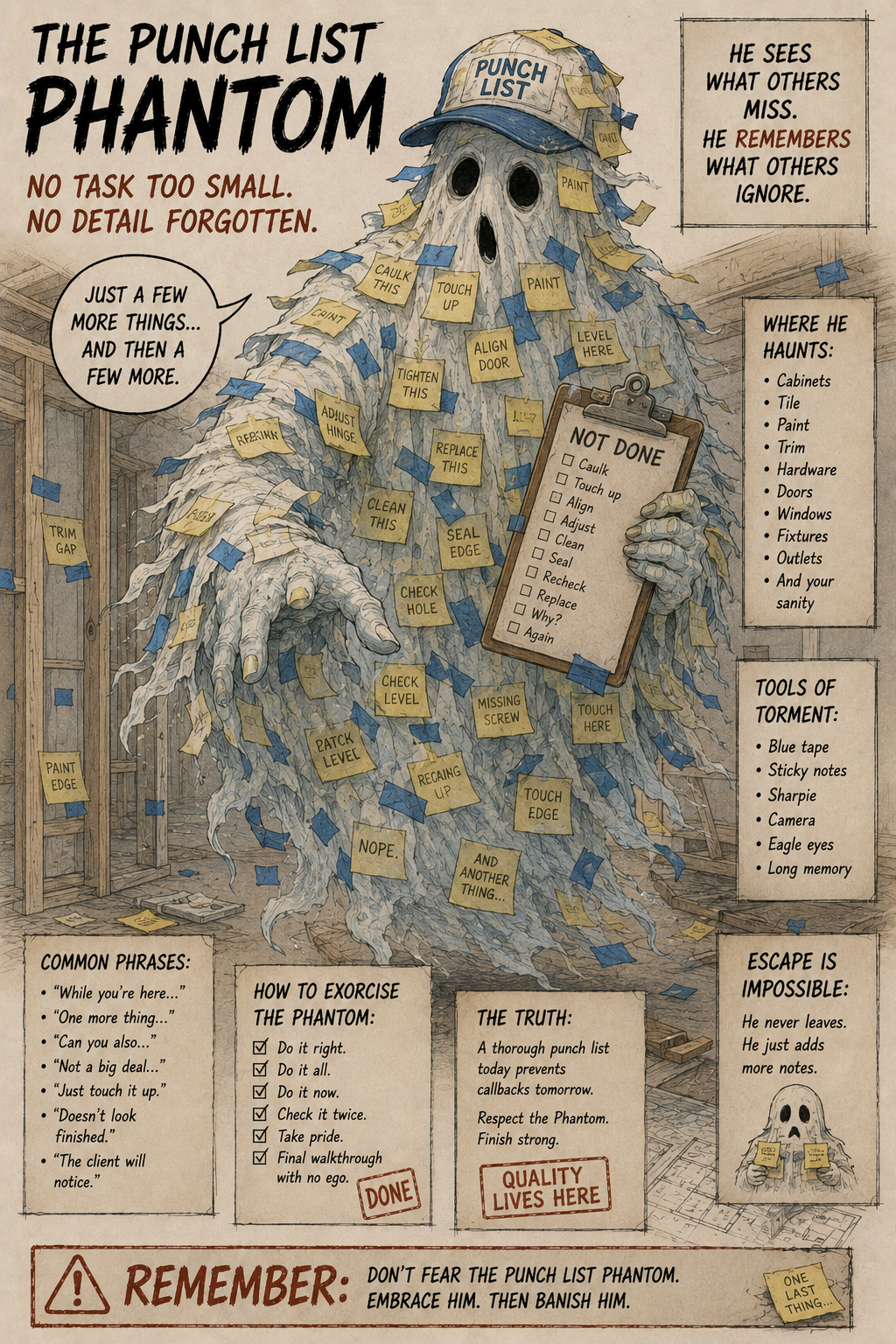
The Punch List Phantom becomes powerful when everyone is tired and starts calling the house “done” before the details are truly complete, corrected, verified, and documented.
The house looks finished. The photos look finished. The homeowner starts imagining moving day. Then the Punch List Phantom floats through the hall and unrolls an ancient scroll of blue tape, missing covers, paint touchups, sticky doors, crooked plates, and “one last thing.”
The Punch List Phantom becomes powerful when everyone is tired and starts calling the house “done” before the details are truly complete, corrected, verified, and documented.
Episode 7 teaches that closeout is a phase, not a mood.
Sunlight enters the finished house. Floors shine. Cabinets close. The homeowner smiles. Haruki feels the dangerous phrase forming: “Looks done.”
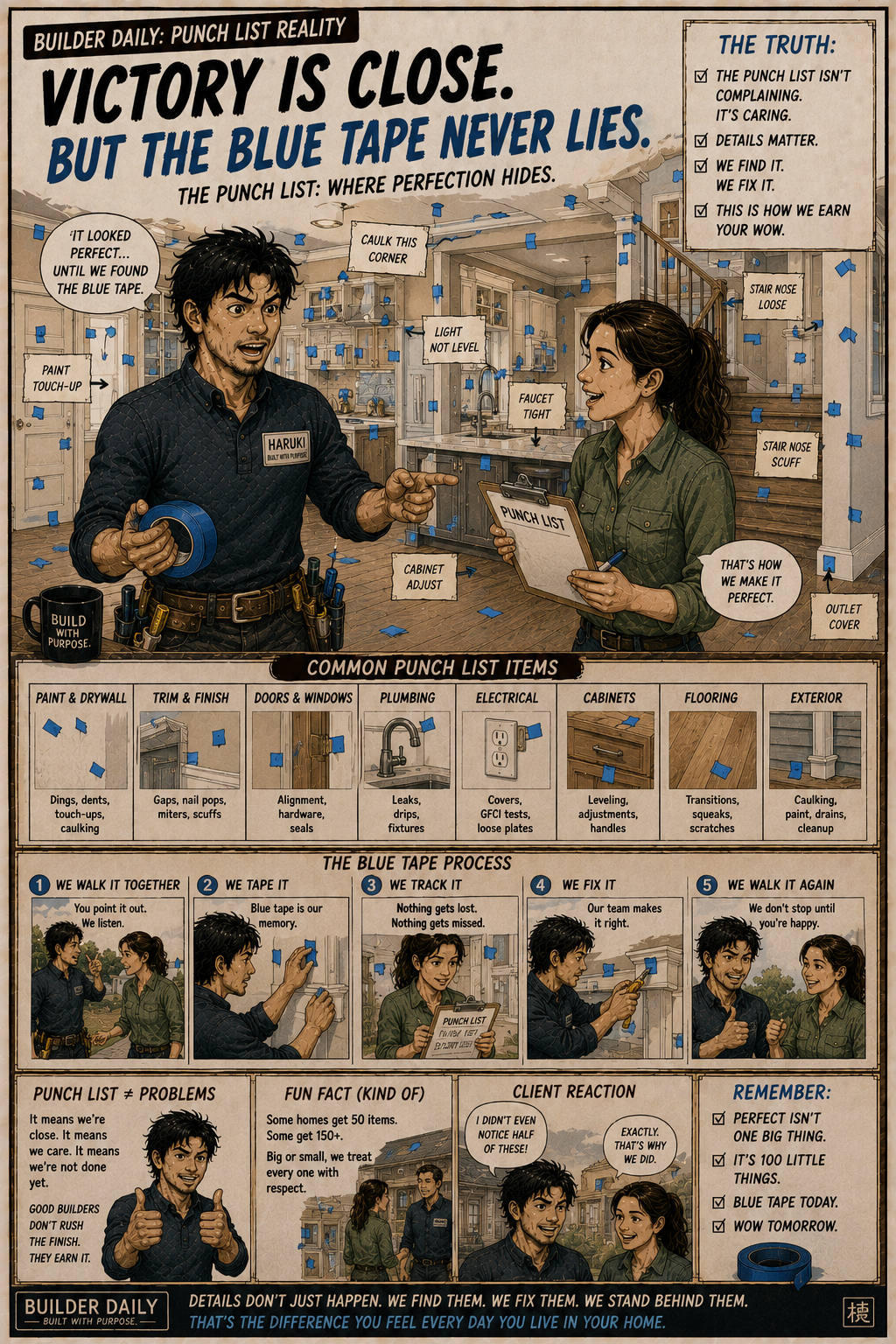
A tiny strip of blue tape appears on the wall. Then another. Then another. The Punch List Phantom drifts through the hallway carrying a scroll longer than the driveway.
Paint touchups. Missing escutcheons. Cabinet adjustments. Door rubs. Loose hardware. Final clean. Manuals. A correction item hiding behind the laundry door.
The crew says, “We are basically done.” Haruki knows “basically” is where the Phantom sleeps. He sharpens the checklist pencil.
Haruki sorts the list by trade, priority, access, parts, inspection, and verification. The Phantom begins to flicker.
Items are completed, checked, photographed, and signed off. The scroll shrinks. The house gets quieter. The Phantom whispers, “I will return at final clean.”
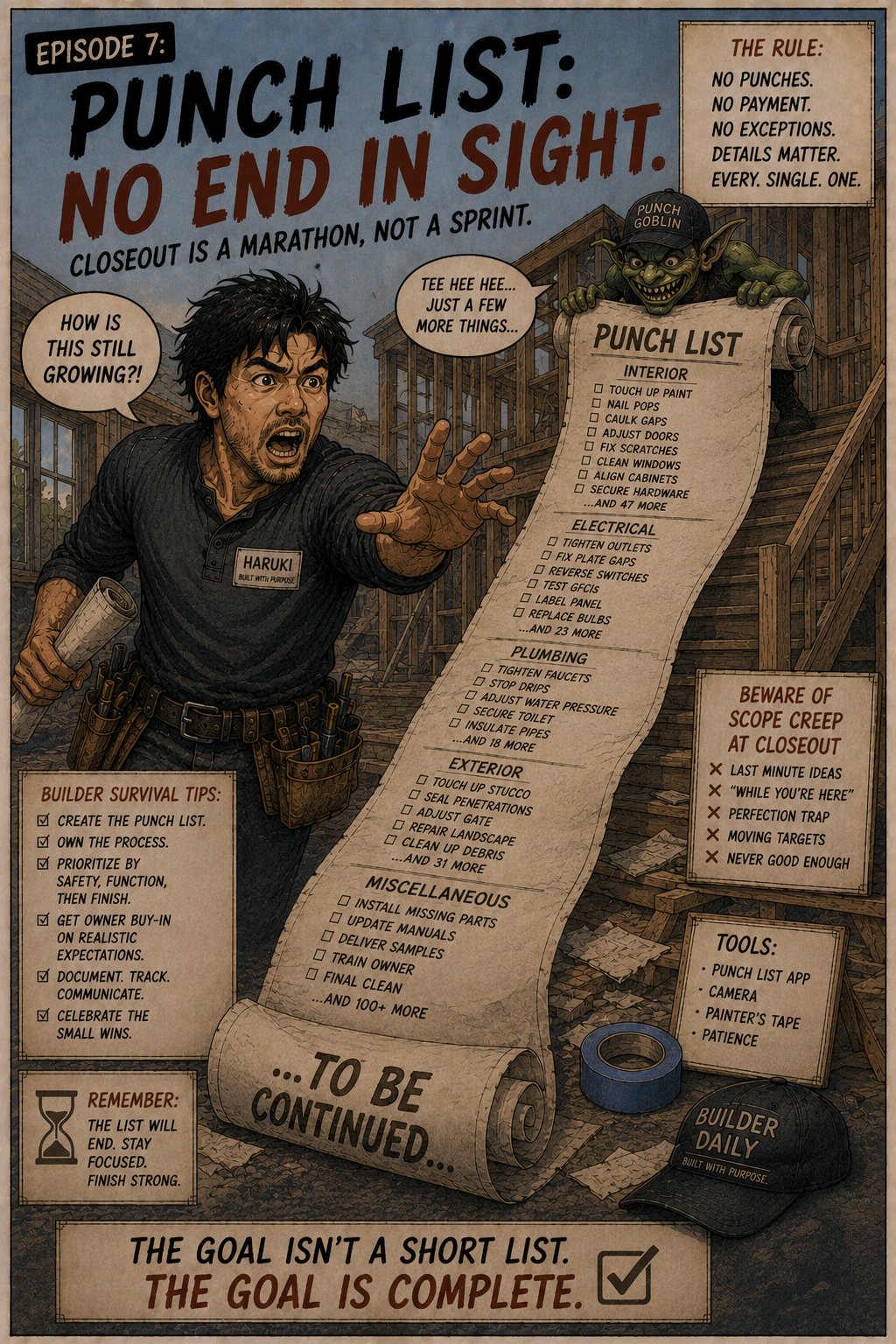
Punch list work needs ownership, sequencing, materials, verification, and a real finish line.
Walk the project carefully and gather all visible incomplete, damaged, missing, or incorrect items.
Group items by trade, location, urgency, material needs, and whether inspection or owner approval is involved.
Each item needs a responsible party. “Somebody” is not a subcontractor.
Do not mark an item complete because someone said it was done. Check the work.
Finish the documentation, final approvals, manuals, warranties, clean-up, and signoff.
Blue tape identifies a task. It does not complete the task. Each item still needs labor, materials, access, supervision, and verification.
Does it mean visually complete, ready for final inspection, punch list started, punch list complete, cleaned, documented, or ready for turnover?
Everyone is tired. That is why the process matters. The checklist keeps fatigue from becoming the project manager.
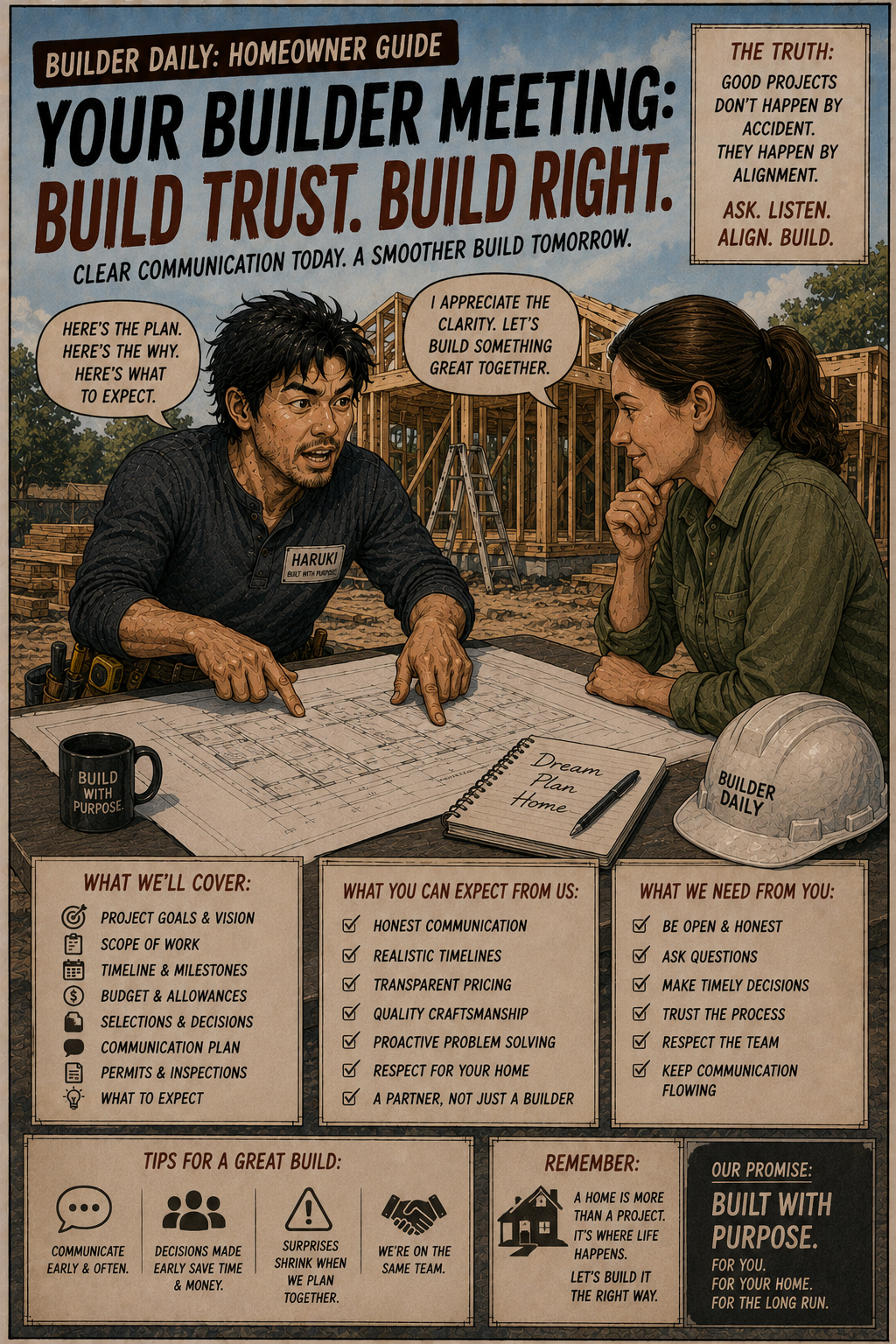
Homeowners should not assume every finished-looking surface means the project is complete. Closeout includes details, corrections, inspections, documentation, cleaning, and turnover items.
The better sentence is: “Here is the remaining list, who owns each item, when it will be complete, and how we will verify it.”
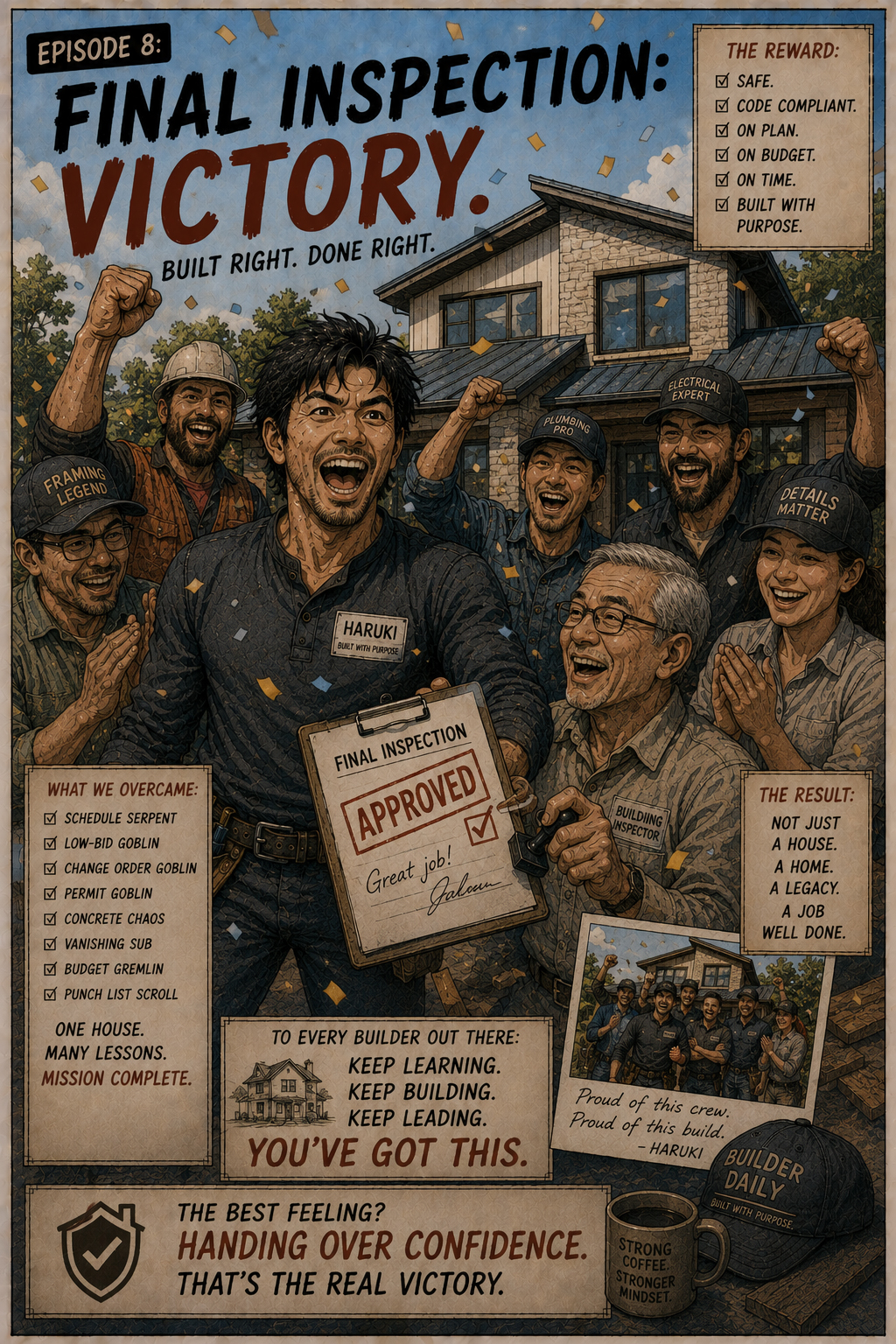
The scroll is shrinking. The blue tape is disappearing. Now Haruki and the crew face final inspection, final details, and the approval stamp that ends the battle.
BuilderDaily.com is educational manga comedy about construction concepts and builder communication. Closeout, punch list, warranty, payment, and final approval requirements vary by contract, jurisdiction, and project. Always consult licensed professionals, approved plans, contracts, permits, inspectors, and qualified advisors for project-specific decisions.