Episode 6 • Allowances • Finish upgrades bite

The Budget Gremlin.

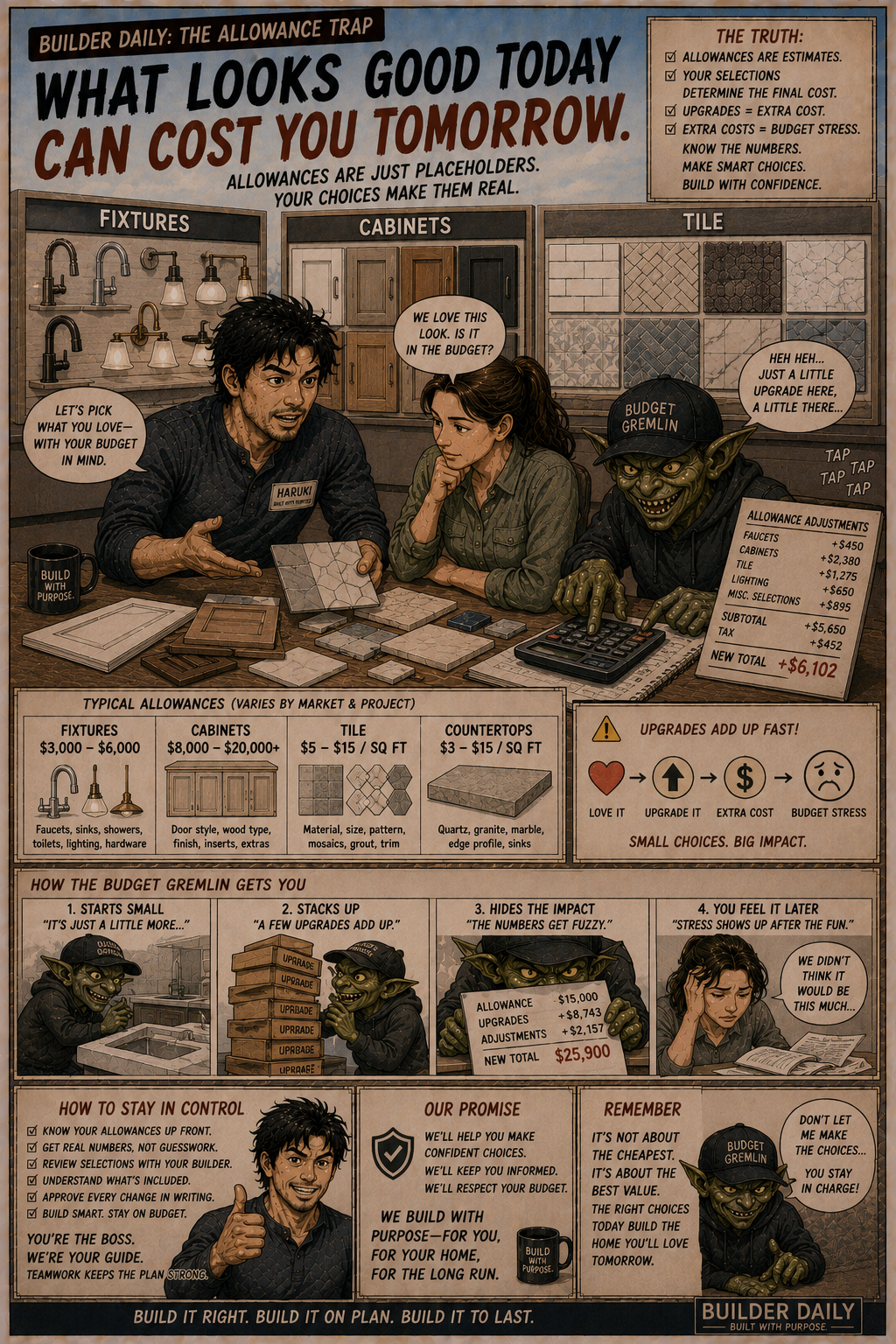
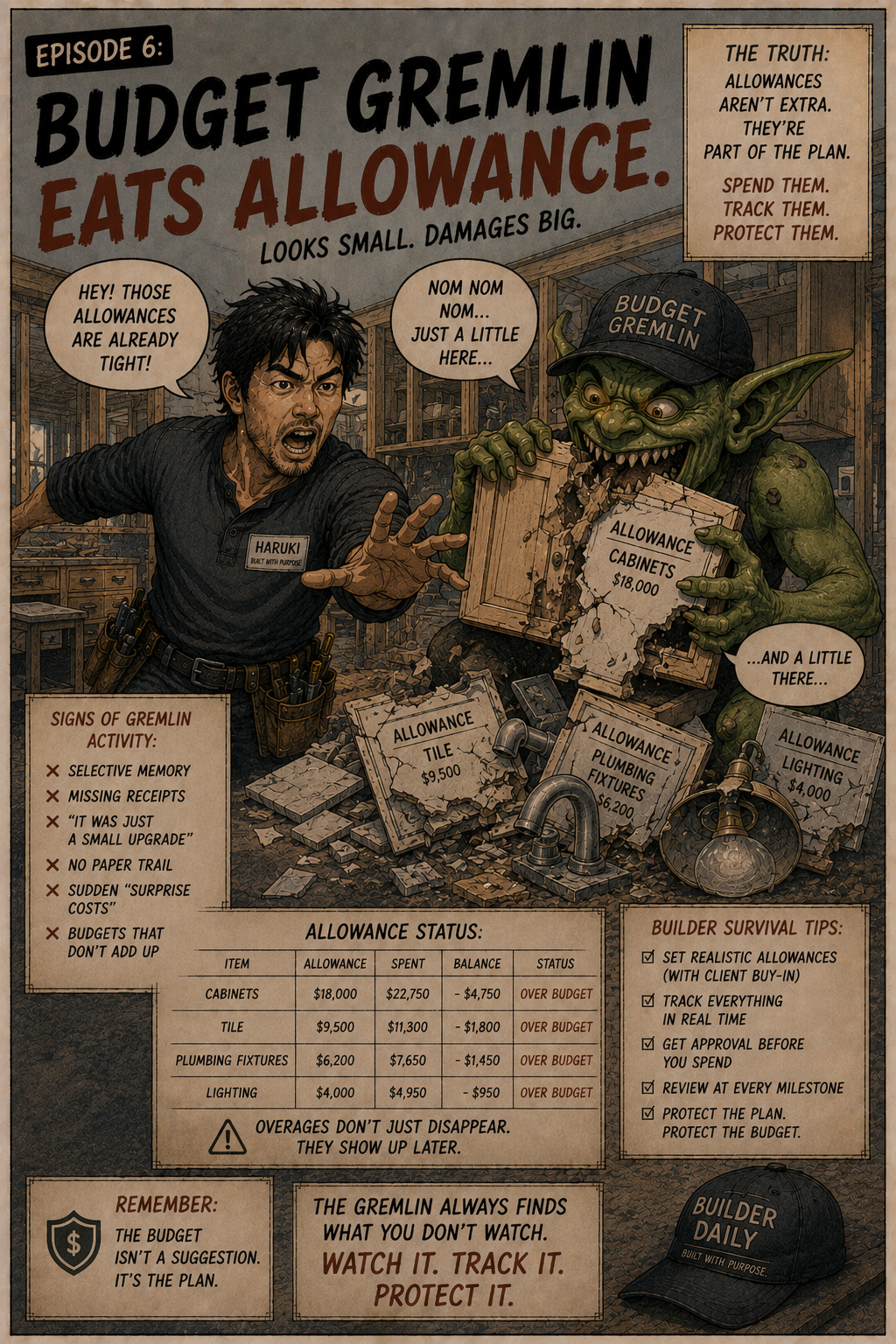
The inspection passes. The jobsite cheers. Then the homeowner enters the finish showroom. Cabinets sparkle. Tile glows. Fixtures whisper. In the shadows, the Budget Gremlin opens his mouth and starts chewing through the allowance sheet.

The Budget Gremlin chewing through cabinet, tile, and fixture allowances
Episode 6: the finish showroom smells like danger Track allowances
Episode setup

The budget does not explode. It gets nibbled.

Budget problems often arrive as a hundred tiny upgrades: nicer cabinets, better tile, premium fixtures, designer lighting, extra hardware, custom trim, special grout, upgraded appliances, and “while we are here” decisions.

The Budget Gremlin survives because each bite looks small by itself.

  • Know what each allowance includes.
  • Track selections against the allowance.
  • Price upgrades before approving them.
  • Keep contingency separate from wish-list upgrades.
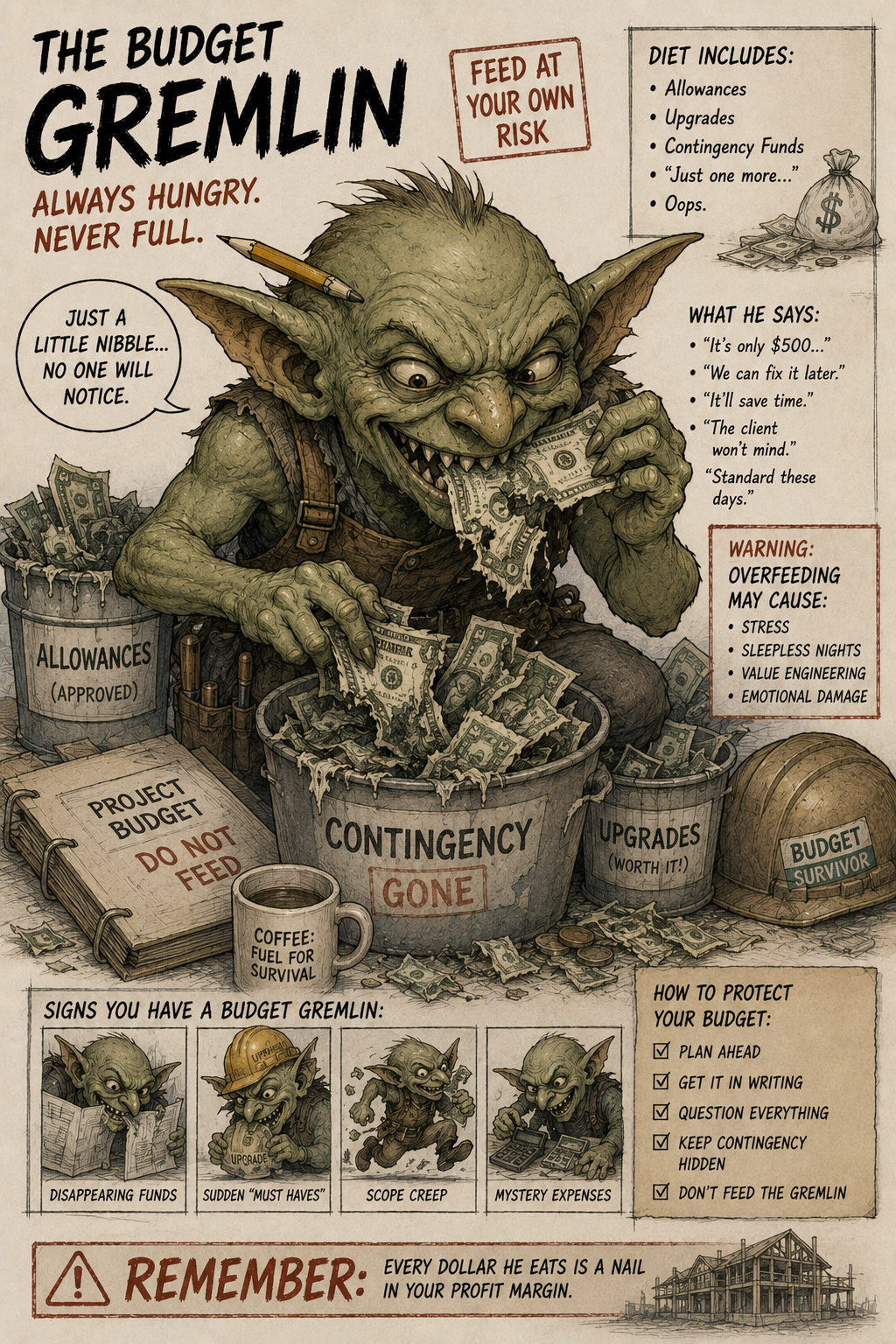
Budget Gremlin eating dollar bills, allowances, and contingency funds
Manga story beats

Chapter panels.

Episode 6 teaches that allowances must be managed before finish decisions become invoices.

Panel 1

The showroom portal.

The homeowner steps into the finish showroom. Cabinets shine. Tile samples sparkle. Haruki feels the air change. Somewhere near the quartz slabs, something giggles.

Panel 2

The first bite.

“This one is only a little more,” says the showroom display. The Budget Gremlin chews one corner of the cabinet allowance and wipes his mouth with a receipt.

Panel 3

The tile avalanche.

The selected tile needs special trim, different setting material, extra layout time, and a grout decision. The gremlin grows three inches taller.

Panel 4

The fixture parade.

Faucets, lights, pulls, mirrors, sinks, shower valves, and appliances march across the table. Each one carries a tiny flag that says “upgrade.”

Panel 5

The allowance ledger.

Haruki opens the Budget Ledger. The gremlin recoils as every selection is compared against the allowance, tax, delivery, labor, and schedule impact.

Panel 6

The gremlin shrinks.

The homeowner makes informed choices. Some upgrades stay. Some get cut. The budget stops bleeding in secret. The gremlin mutters, “I hate spreadsheets.”

Builder lesson

Allowances need active management.

An allowance is a placeholder budget for an item not fully selected or priced at contract time. It can be useful, but only if everyone understands what it covers and what happens when selections exceed it.

A good allowance process tracks selections, overages, credits, taxes, freight, labor impacts, lead times, and change approval.

  • Define the allowance category clearly.
  • State whether labor, tax, freight, and install are included.
  • Compare each selection to the allowance before ordering.
  • Approve overages before materials are purchased.
Homeowner choosing finishes while the Budget Gremlin adjusts the numbers
Allowance traps

Where the gremlin usually hides.

Finish budgets creep when the category is vague and the real installed cost is not tracked.

Trap 01

Cabinets

Door style, finish, inserts, hardware, panels, crown, fillers, and install details can change the real cost quickly.

Trap 02

Tile

Material price is only part of the story. Layout, trim, waterproofing, cuts, setting material, and labor matter.

Trap 03

Fixtures

Plumbing fixtures can affect valves, rough-in, accessories, delivery timing, and installation labor.

Trap 04

Lighting

Decorative fixtures, controls, dimmers, low-voltage, and placement changes can ripple into electrical work.

Trap 05

Appliances

Appliance changes can affect cabinets, electrical, gas, plumbing, ventilation, delivery, and finish openings.

Trap 06

Contingency

Contingency should protect the project from unknowns. It should not quietly become the upgrade snack drawer.

Homeowner translation

Ask what the allowance really buys.

Homeowners should not be afraid of selections. But they should know whether a choice fits the allowance before the material is ordered and before the budget surprise becomes permanent.

  • What amount is allowed for this category?
  • Does the allowance include labor, tax, freight, and install?
  • What is the overage or credit?
  • Does this selection affect schedule or other trades?
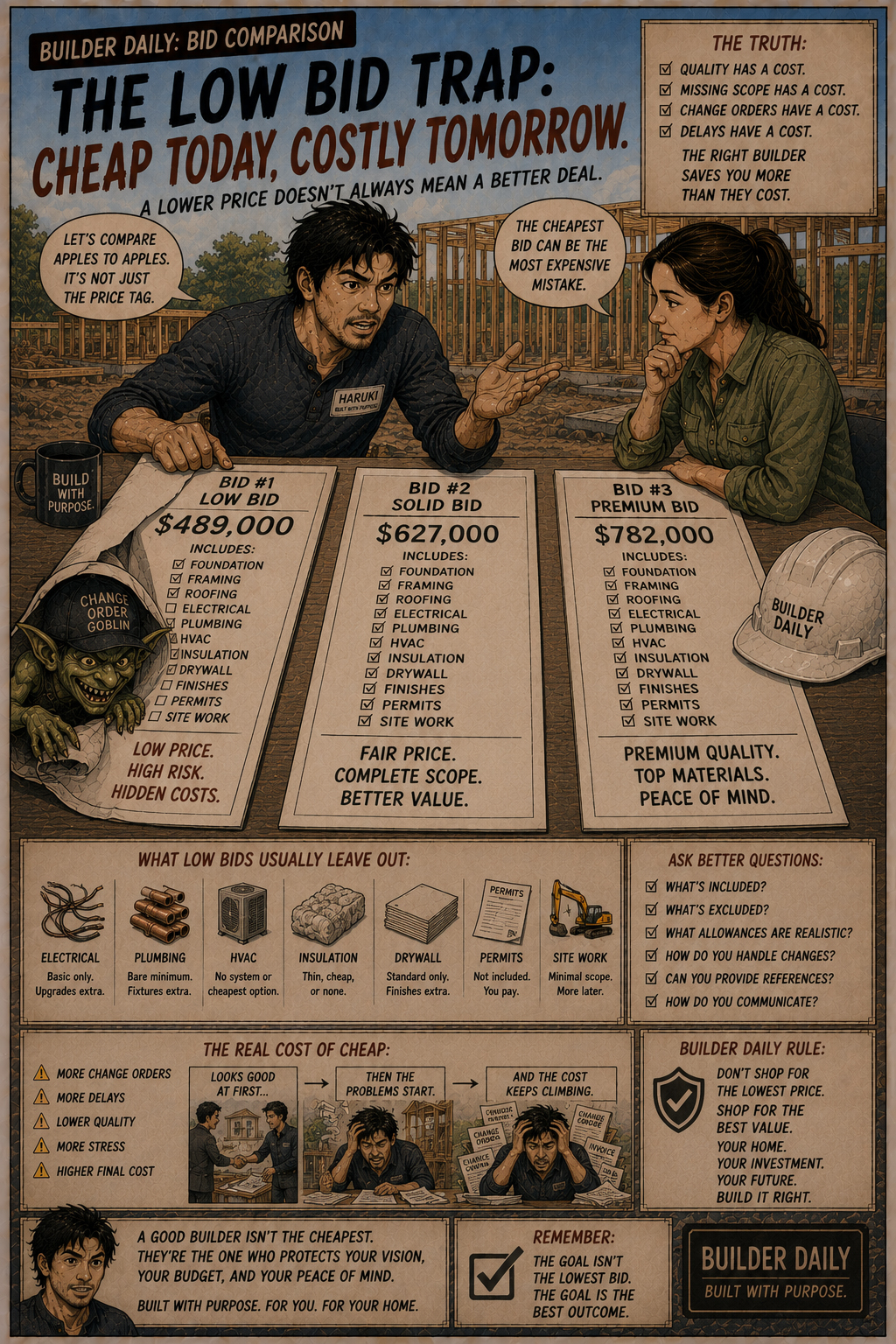
Three bids on a table with the cheapest one hiding a goblin
Villain file

Know the Budget Gremlin.

The gremlin does not need one giant mistake. He prefers tiny untracked decisions.

Gremlin eating dollar bills, allowances, and contingency funds
Weakness

The gremlin hates transparent math.

The Budget Gremlin loses power when selections are tracked, overages are approved, credits are visible, and contingency is protected.

  • Clear allowance categories.
  • Selection tracking.
  • Approved overages.
  • Protected contingency.
Next episode

Episode 7: The Punch List Scroll

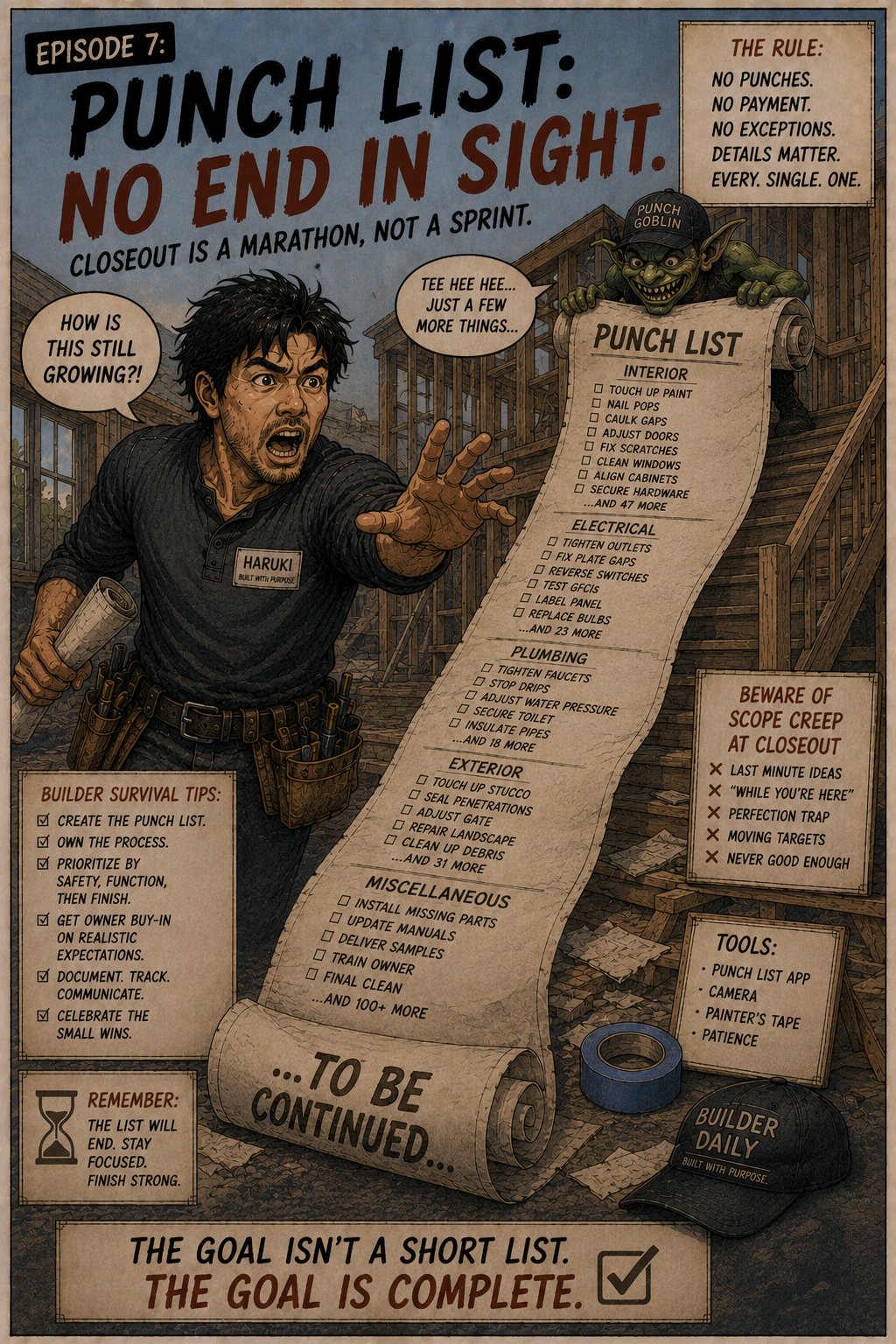
The finishes are installed. The house looks almost done. Then the Punch List Phantom unrolls a scroll of blue tape, tiny fixes, missing covers, paint touchups, and “one last thing.”

Punch list unrolling like an endless ancient scroll
Important

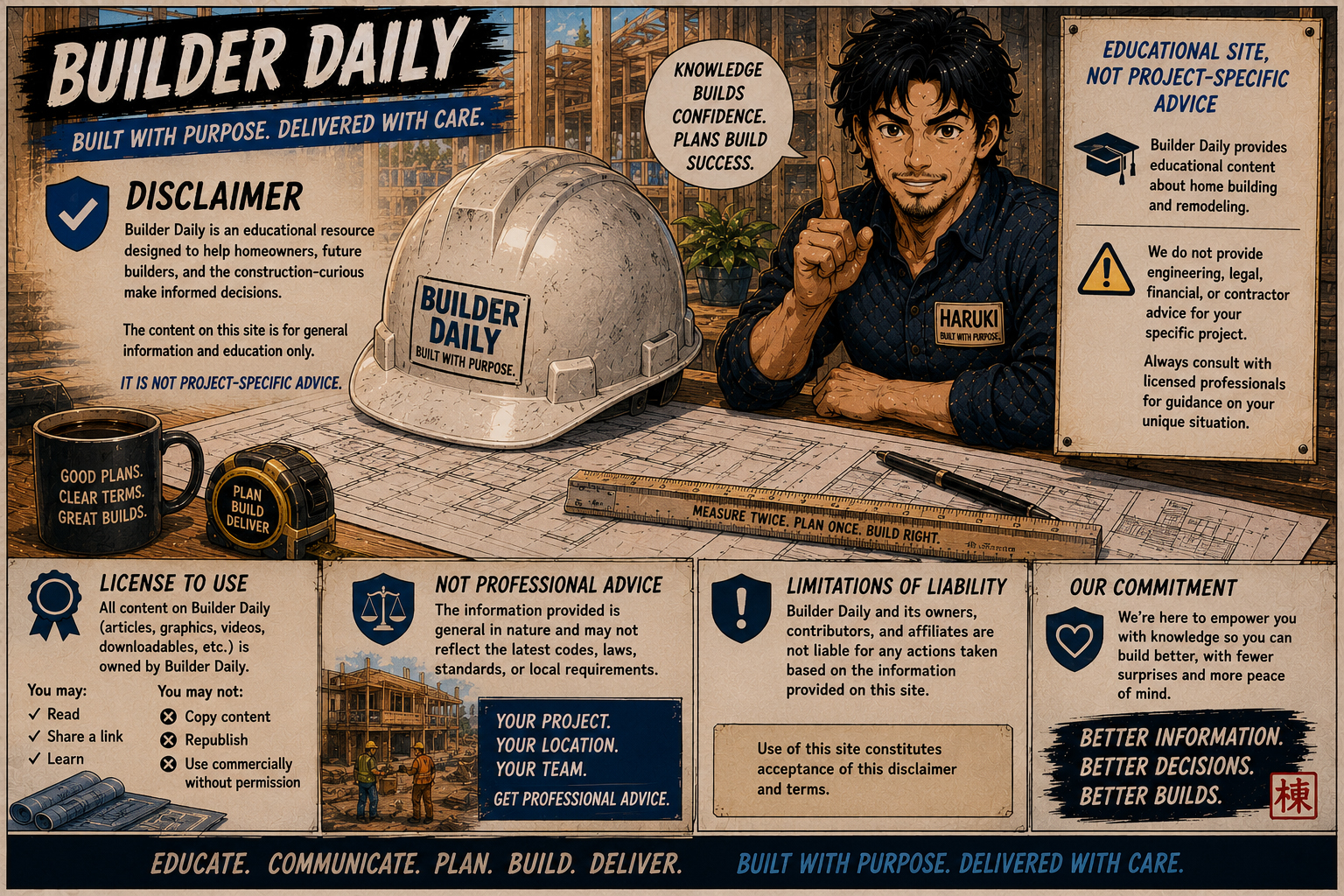
Educational manga, not project-specific advice.

BuilderDaily.com is educational manga comedy about construction concepts and builder communication. Budgeting and allowance terms vary by contract and project. Always consult licensed professionals, approved plans, contracts, local requirements, and qualified advisors for project-specific decisions.

Hard hat, construction plans, ruler, and educational site disclaimer visual