FAQ • Builder questions • Goblin-free answers

Construction questions, answered before the jobsite yells.

BuilderDaily.com explains common construction questions in plain English with manga comedy, because the best time to understand scope, permits, allowances, change orders, inspections, and punch lists is before they become expensive surprises.

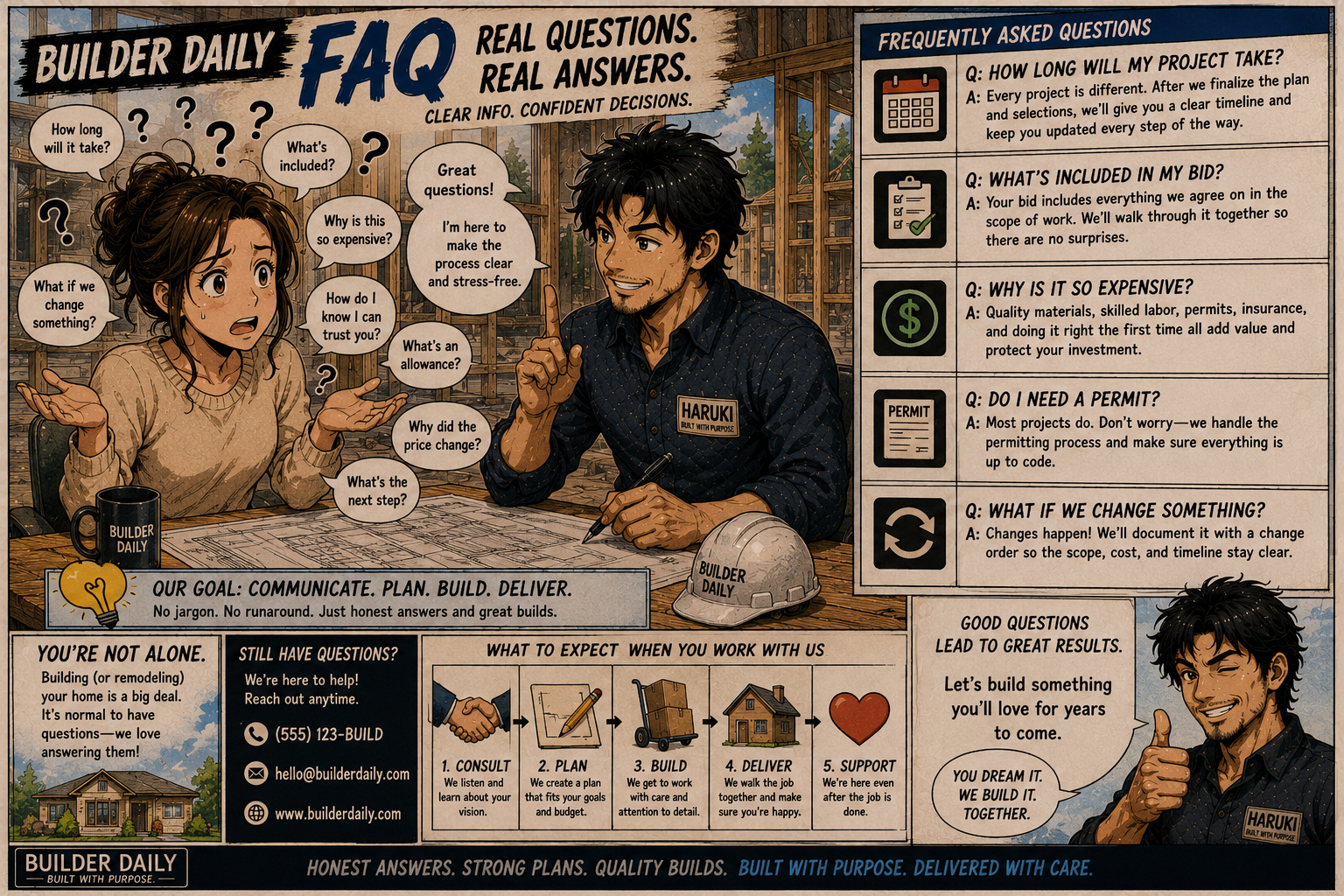
Homeowner surrounded by question marks while Hammer Haruki calmly explains construction
The question mark is cheaper than the change order Ask early
Start here

The big question behind every little question.

Most homeowner construction questions eventually become one of four issues: scope, money, schedule, or approval. If a decision affects one of those, it should be written down clearly.

  • What exactly is included?
  • What does it cost?
  • Does it affect the schedule?
  • Does it require approval or inspection?
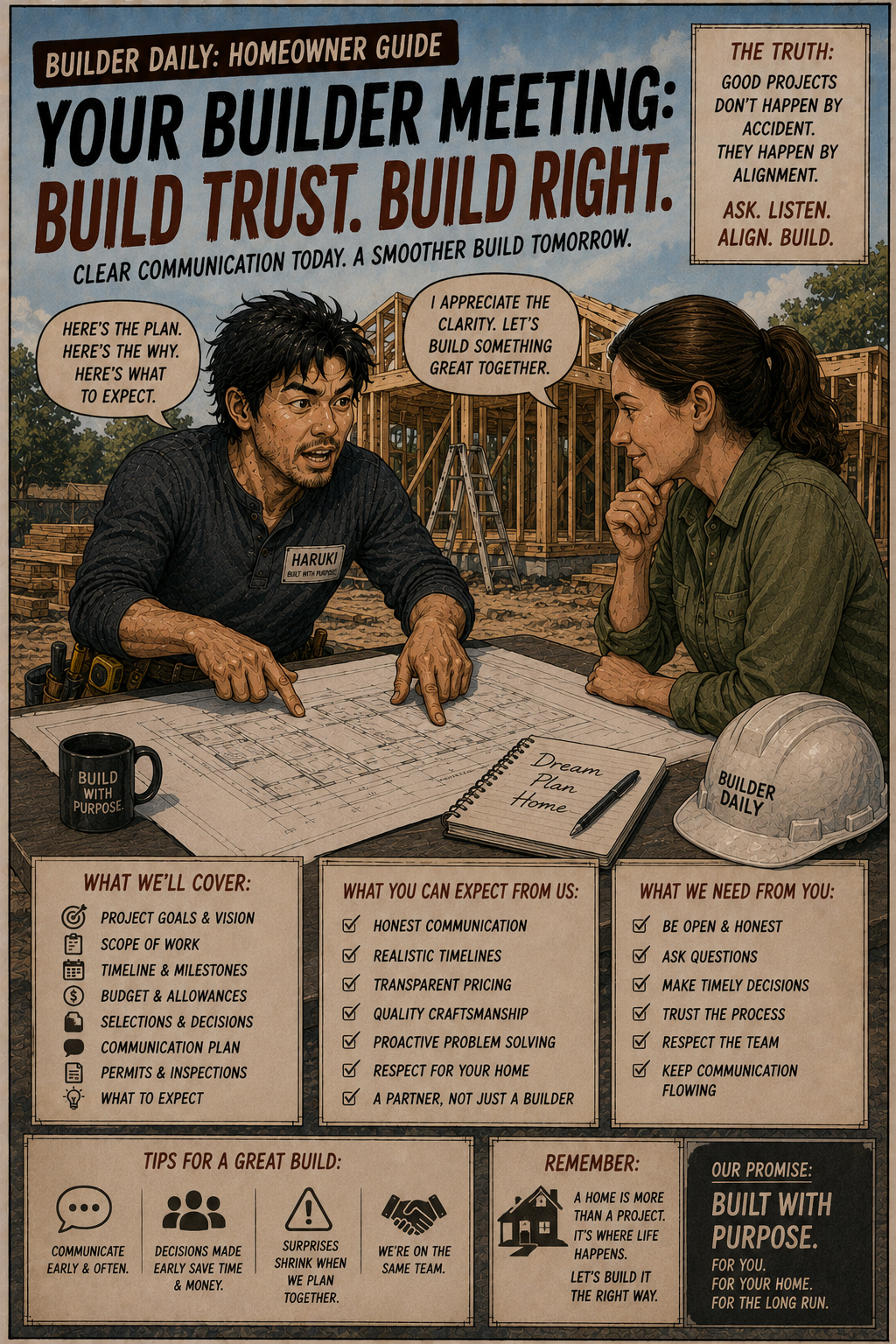
Haruki explaining construction plans to a homeowner at a folding table on site
Common questions

Homeowner FAQ.

Plain-English answers for the questions that show up before, during, and after a build.

Scope

What is the first thing I should ask a builder?

Ask what is included and what is excluded. A price without clear scope is not very useful. You want to understand labor, materials, supervision, permits, cleanup, allowances, and assumptions before comparing numbers.

Bids

Why are builder bids so different?

Bids may include different scopes, assumptions, supervision levels, materials, allowances, schedule risks, exclusions, and overhead. The lowest bid may simply be missing important work.

Allowances

What is an allowance?

An allowance is a placeholder budget for something not fully selected yet, such as tile, cabinets, fixtures, lighting, or appliances. Ask whether labor, freight, tax, and installation are included.

Change orders

Are change orders bad?

No. A change order is a tool. It becomes a problem when the work changes without clear scope, price, schedule impact, and written approval.

Permits

Does “submitted” mean approved?

No. Submitted means paperwork was sent in. Approved means the authority accepted it. A project should know which plan set is approved and what revisions are current.

Inspections

Is a failed inspection a disaster?

Not always. Corrections can be part of the process. What matters is that corrections are tracked, fixed, documented, and reinspected before work is covered or the next phase depends on it.

Schedule

Why does one delay affect so many things?

Construction is sequenced. One missed trade can delay inspections, drywall, cabinets, finishes, and other trades that were scheduled after it.

Punch list

What is a punch list?

A punch list is a list of final items to correct, complete, touch up, or verify. It is normal near the end of a project, but it still needs time, materials, labor, and management.

Plans

Do I need to understand the plans?

You do not need to become an architect, but you should understand the basic layout, major notes, elevations, finishes, and decisions you are approving.

Communication

What should be in writing?

Anything that affects scope, cost, schedule, approvals, finishes, responsibilities, or completion should be written clearly enough that everyone has the same memory later.
FAQ monsters

Which goblin answers your question?

BuilderDaily characters make construction problems easier to remember.

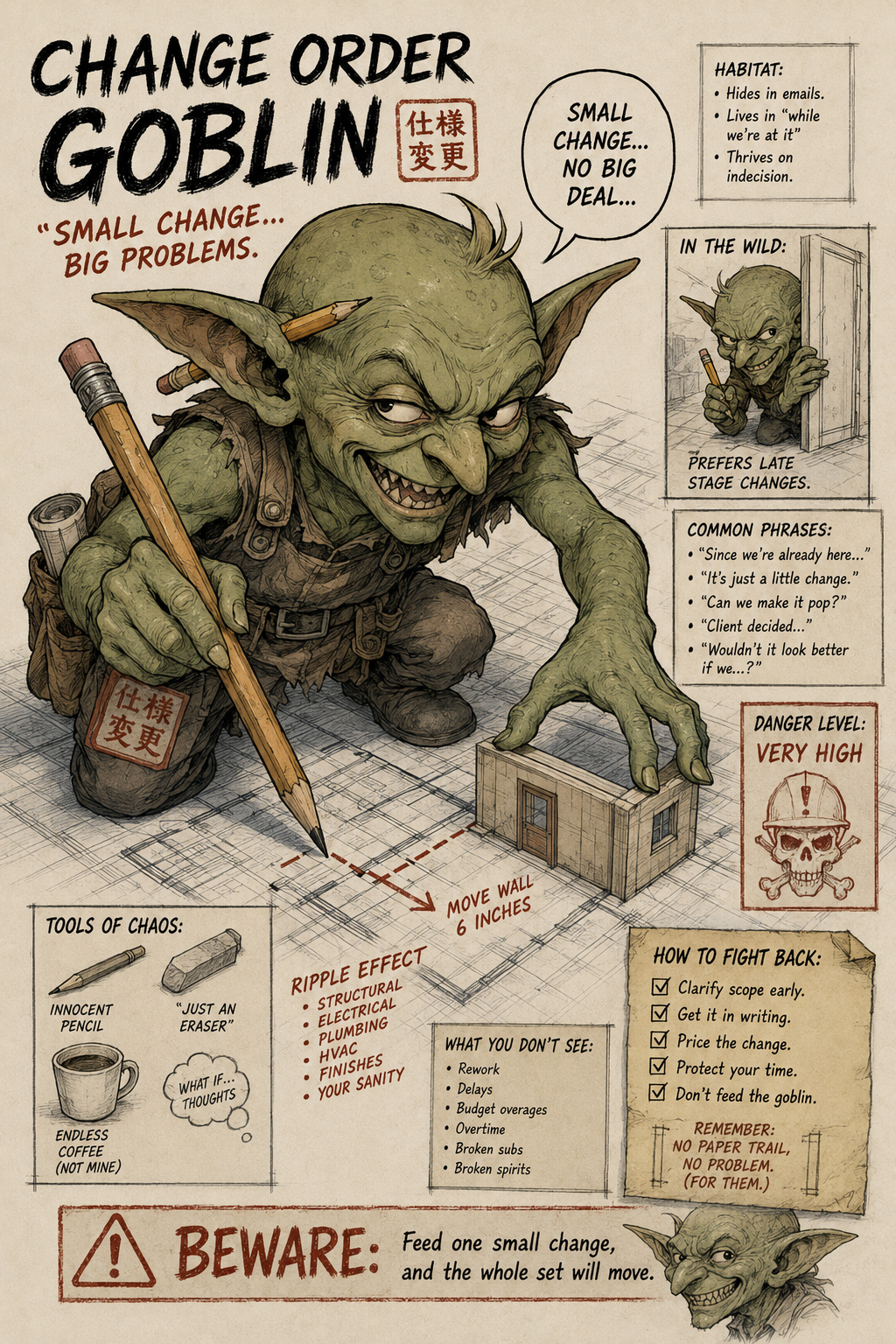
Change Order Goblin holding a pencil and moving walls on a blueprint

Change Order Goblin

Questions about changes, approvals, scope, cost, and “can we just?”

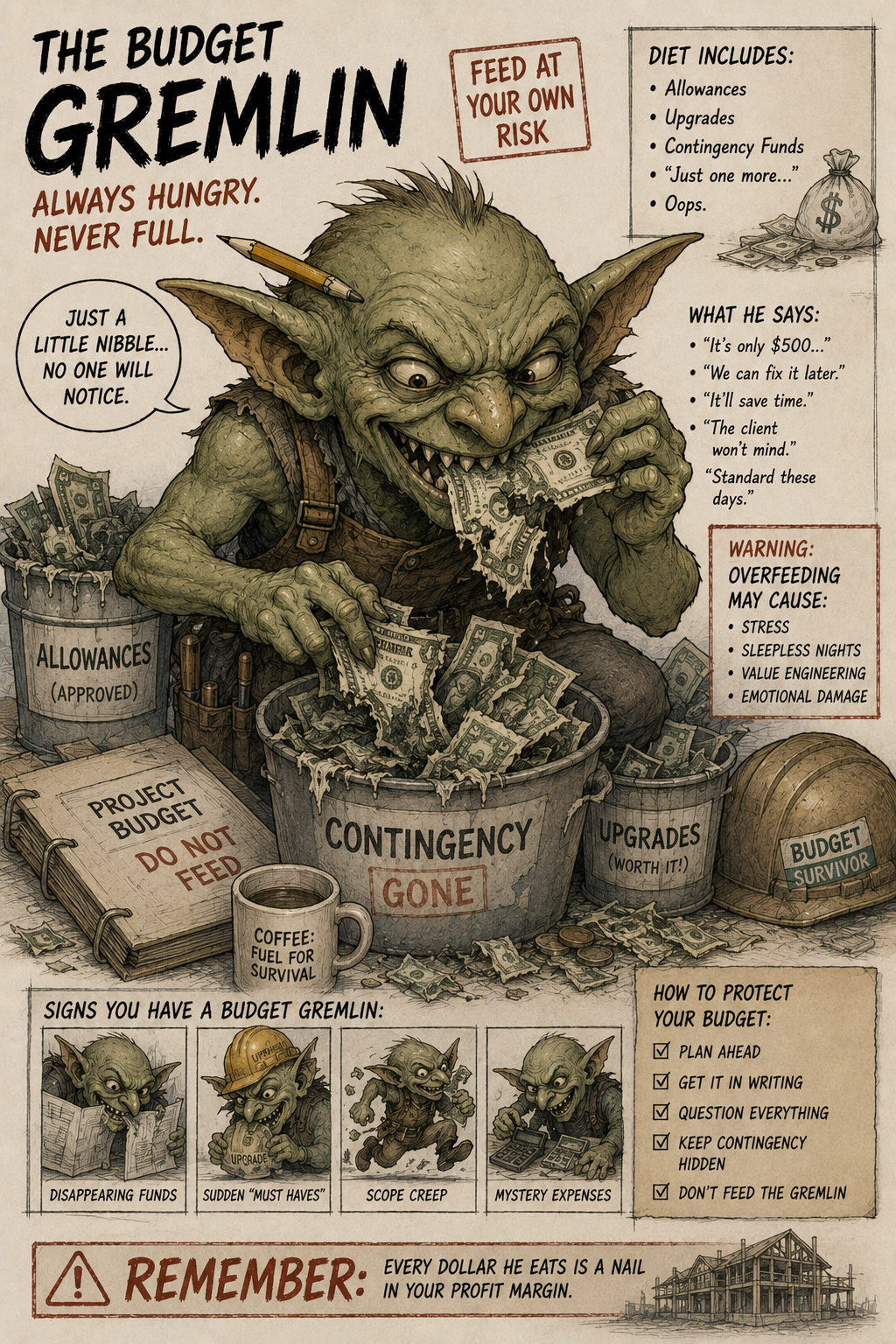
Budget Gremlin eating money and allowances

Budget Gremlin

Questions about allowances, overages, upgrades, bids, and contingency.

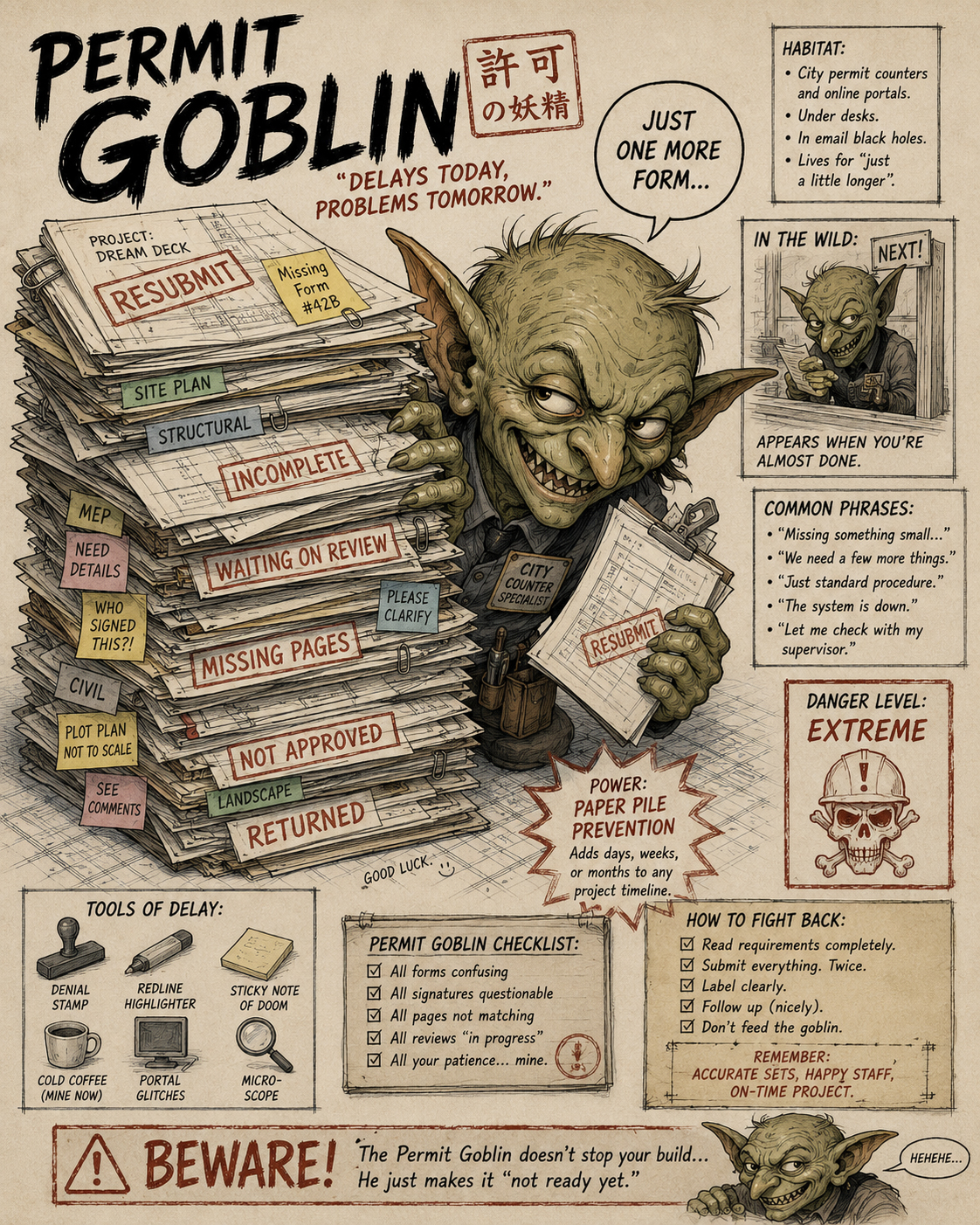
Permit Goblin hiding behind stamped plans and missing forms

Permit Goblin

Questions about permits, plans, revisions, approvals, and missing forms.

Inspection Dragon with checklist and magnifying glass

Inspection Dragon

Questions about inspection readiness, corrections, visible work, and approvals.

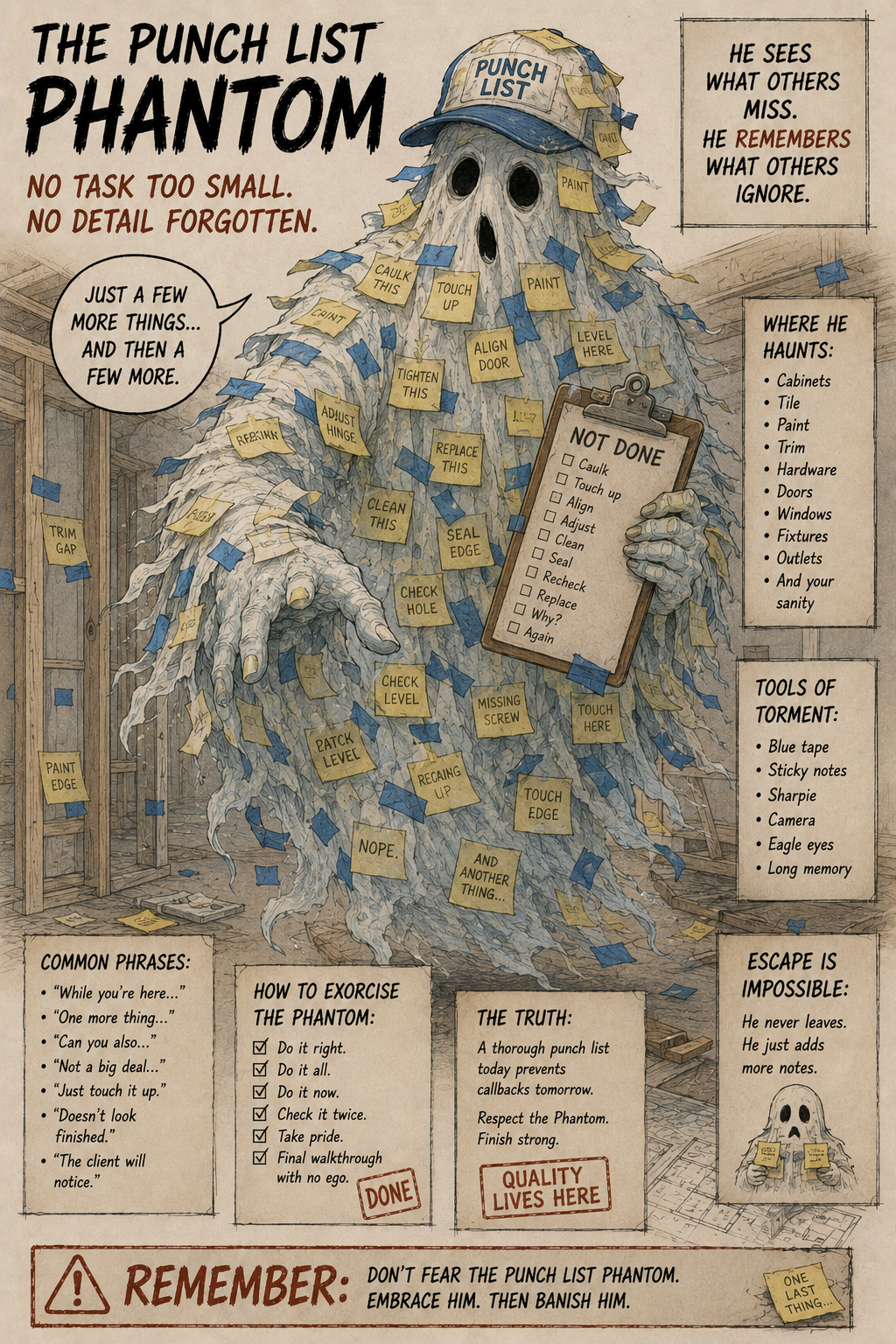
Punch List Phantom made of sticky notes and blue tape

Punch List Phantom

Questions about final details, blue tape, closeout, and “almost done.”

Builder relationship

What makes a good homeowner-builder conversation?

A useful conversation turns vague concern into clear next steps. Instead of “Is everything okay?” ask what changed, what is affected, what is next, and what decision is needed.

  • What is the issue?
  • What options do we have?
  • What does each option cost?
  • How does it affect schedule or approval?
Haruki directing framers, electricians, plumbers, and inspectors like a battlefield general
Quick answers

Fast field translations.

Short answers for common construction phrases.

Phrase

“Almost done”

Usually means major work is complete, but details, corrections, inspections, punch list items, or documentation may remain.

Phrase

“Owner supplied”

The homeowner provides the item. Clarify ordering, delivery, storage, damage, warranty, and install responsibility.

Phrase

“Rough-in”

Systems are installed before being covered by insulation, drywall, concrete, or finishes. Inspection usually matters here.

Phrase

“Field condition”

Something discovered on site that may not have been known from drawings, assumptions, or earlier walkthroughs.

Phrase

“Lead time”

The time needed to obtain a material, fixture, appliance, or specialty item before it can be installed.

Phrase

“Final”

Usually refers to final inspection, final completion, or final payment. Ask which final people mean.

Important

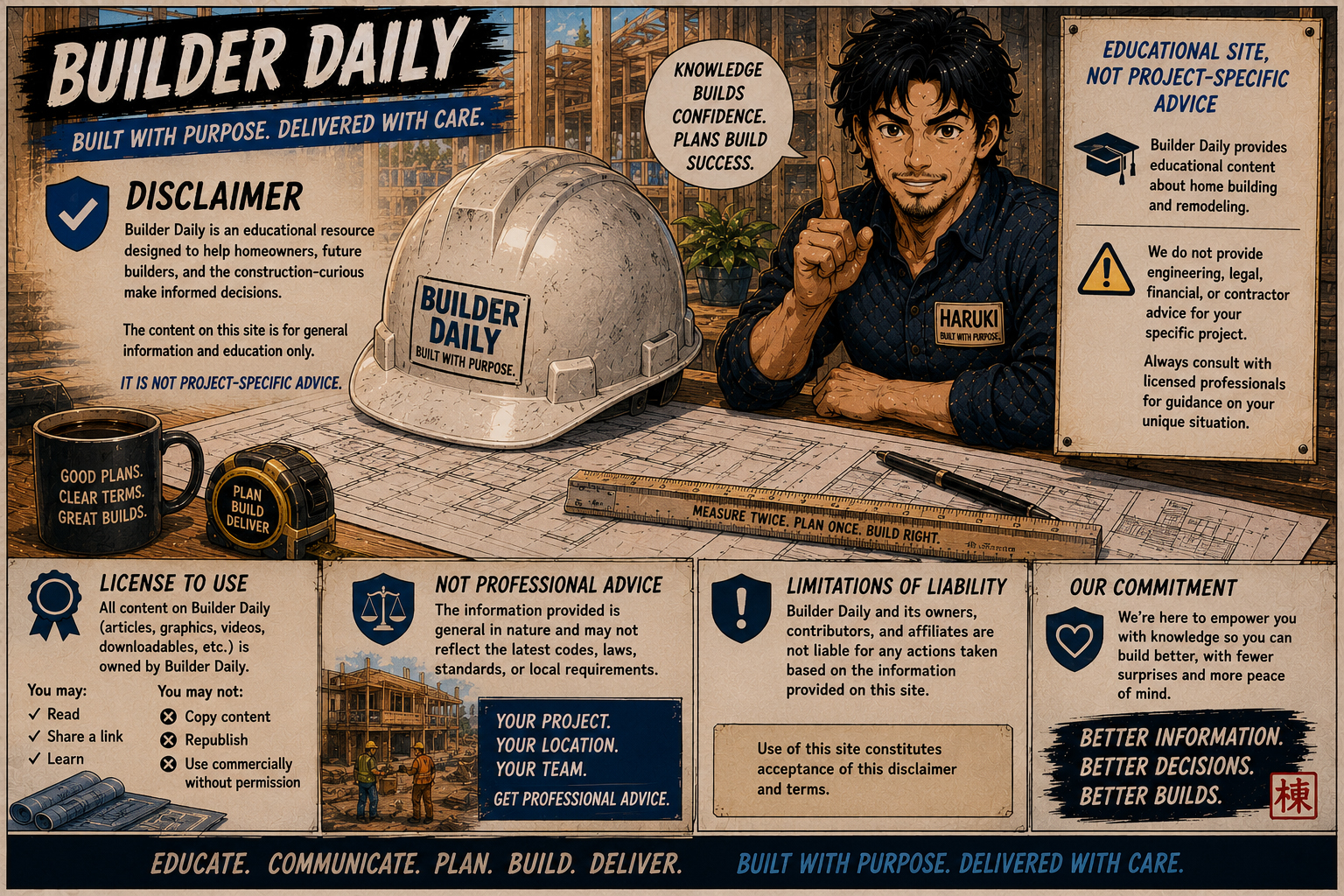
Educational FAQ, not project-specific advice.

BuilderDaily.com provides general educational construction concepts in manga-comedy form. Actual answers vary by contract, plans, jurisdiction, code, permit, site conditions, and project team. Always consult licensed professionals, approved plans, contracts, permits, inspectors, and local authorities for project-specific decisions.

Hard hat, construction plans, ruler, and educational site disclaimer visual